Sciatica physiotherapy
Sciatica physiotherapy in Townsville
Pain travelling from your lower back or buttock into your leg can make sitting, walking, sleeping and working difficult.
At PhysioPM, we assess your symptoms and physical function to help you better understand your condition and develop a rehabilitation plan based on your needs.
What is sciatica?
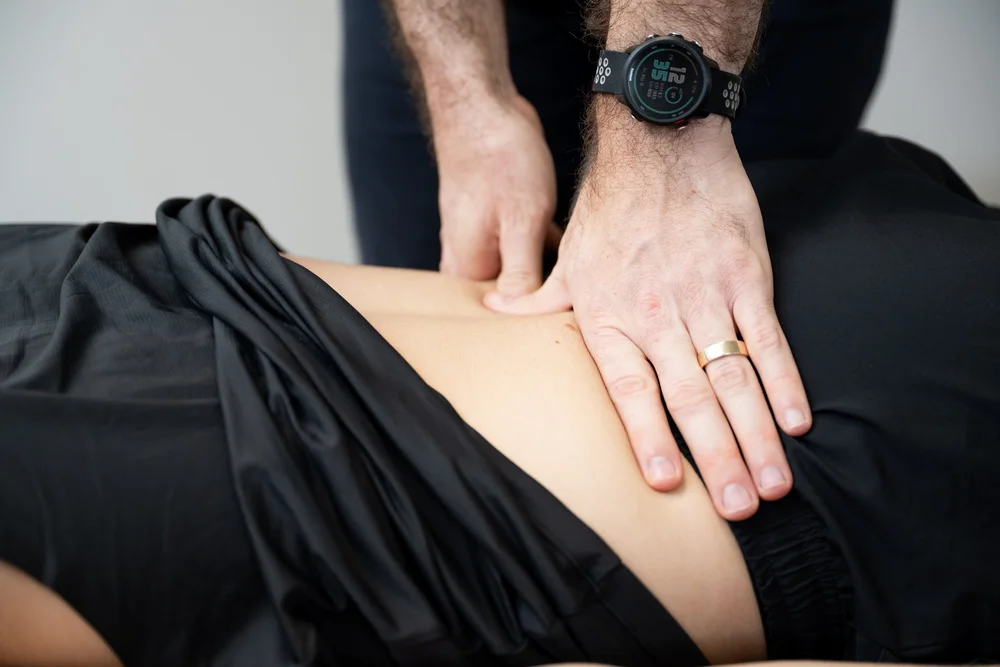
Sciatica is a term commonly used to describe pain travelling into the leg associated with irritation or sensitivity of nerve structures in the lower back.
Symptoms may include pain in the buttock or leg, pins and needles, numbness or changes in muscle strength.
Not all pain travelling into the leg is sciatica. Other conditions can produce similar symptoms, which is why an appropriate assessment is important.
When might physiotherapy help?
Physiotherapy may be appropriate if you're experiencing:
- Pain travelling from your lower back or buttock into your leg.
- Symptoms that are affecting your ability to sit, stand or walk.
- Difficulty lifting, exercising or performing your usual work duties.
- Recurrent episodes of back and leg pain.
- Ongoing symptoms despite previous treatment.
- Uncertainty about which movements or activities are appropriate.
How we assess sciatica
Your initial consultation involves a detailed discussion of your symptoms, medical history and the activities you're finding difficult.
Depending on your presentation, the physical assessment may include:
- Assessment of lower back and lower limb movement.
- Neurological testing, including muscle strength, sensation and reflexes.
- Assessment of movements and positions that influence your symptoms.
- Review of your ability to perform relevant work, exercise and everyday activities.
- Review of previous imaging and medical reports where appropriate.
Where further medical assessment is indicated, we'll discuss this with you.
Our approach to sciatica rehabilitation
Treatment depends on your symptoms, assessment findings and current abilities.
Rehabilitation may involve:
- Education to help you understand your symptoms.
- Strategies to manage aggravating activities and flare-ups.
- Advice about maintaining appropriate physical activity.
- Exercises to improve movement, strength and physical function.
- Gradual progression towards activities such as lifting, walking, running or returning to work.
- Manual therapy where appropriate.
There is no single exercise program that is appropriate for everyone experiencing sciatica. Your treatment plan should reflect your individual presentation and goals.
Persistent or recurrent sciatica
If you've experienced repeated episodes of back and leg pain, or your symptoms have continued for several months, rehabilitation may need to consider more than your immediate symptoms.
We may assess how your condition is affecting your physical activity, work demands, sleep, exercise and confidence with movement.
Our aim is to help you develop a practical approach to managing your condition while progressively working towards your functional goals.
Related: chronic pain physiotherapy, back pain physiotherapy and return-to-work rehabilitation.
Frequently asked questions
Do I need an MRI before seeing a physiotherapist?
Not necessarily. Many presentations can be assessed initially using your clinical history and physical examination. Imaging may be appropriate in certain circumstances, particularly where further investigation could change your management.
Should I rest if I have sciatica?
Prolonged complete rest is generally not recommended for uncomplicated back and leg pain. However, the type and amount of activity that is appropriate will depend on your symptoms and assessment findings.
How long does sciatica take to improve?
Recovery varies depending on the cause, severity and duration of your symptoms, as well as your individual circumstances. We can discuss realistic rehabilitation expectations following your assessment.
When should I seek urgent medical attention?
Go to an emergency department or call 000 if you develop new loss of bladder or bowel control, difficulty passing urine, numbness around the saddle or genital region, or rapidly progressing leg weakness. These symptoms can indicate a serious condition requiring urgent investigation.
Which appointment should I book?
A 45-minute standard initial consultation is suitable for many presentations. If your symptoms are longstanding, complex or have not responded as expected to previous treatment, consider a 60-minute chronic and complex pain consultation.
Further reading
Sciatica: Causes, Recovery and What Actually Helps
A plain-English guide to sciatica and recovery.
Do I Need an MRI for My Back Pain?
When imaging helps, and when it doesn't change management.
When Is Back Pain Serious?
The warning signs worth knowing.
Low Back Pain Clinical Care Standard
Australian Commission on Safety and Quality in Health Care, 2022.
This page provides general information only and is not a substitute for individual medical advice.
Book an appointment
If back and leg pain is affecting your work, exercise or everyday activities, book an initial consultation at PhysioPM in Townsville. 45 minutes ($165) or 60 minutes ($225) for longstanding or complex symptoms. 57 Park St, Pimlico.

